Supply system in a wargame
In my latest blog post, I delve into the intricacies of the supply system implemented in our game. This system is fundamental to our gameplay, as it dictates the logistics of resource management for military units. Here’s an overview of how it works.
How my supply system works
Resource Consumption by Units
Units in the game consume resources in various ways. Some resources are depleted simply by the presence of the unit, while others are consumed during movement or combat.
Types of Resources:
- Ammunition: Consumed per unit in combat.
- Rations: Required per soldier and crew member in vehicles like tanks.
- Spare Parts: Used for repairing equipment and maintenance.
- Fuel: Burned per kilometer by each unit, including supply trucks.
Supply Requests and Multipliers
Units request supplies based on their consumption. For example, a unit needing 1M liters of fuel, 7K rations, 4K spare parts, and 4 units of ammunition would request a total of 25 supply units from the depot, considering a fuel multiplier of 10. Units have a capacity and a will/wish to self-supply for up to three turns (or 3 weeks).
Supply Chain
The role of the units HQ
Units request supplies from their Headquarters (HQ), which in turn requests supplies from depots. Depots vary in size: small (150 units), medium (200 units), and large (300 units). HQs manage supplies not just for their units but also for directly subordinate battalions like artillery and engineers.
Depots
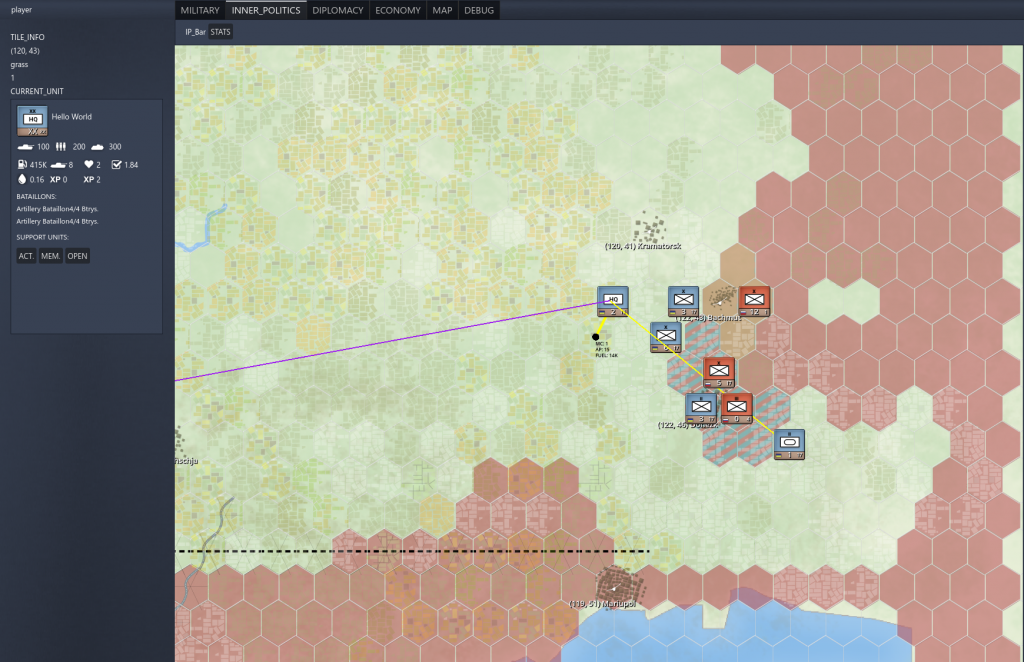
Players can strategically place depots. The game calculates optimal routes to the nearest city, ensuring a clear path from the depot to the capital at the round’s start. The depot-city distance impacts how many supplies can be transported.
Supply Transportation
The efficiency of supply transportation is affected by terrain and other gameplay elements:
- Terrain Impact: Forests, mountains, and hills along the route reduce supply efficiency.
- Combat Aftermath: Hex tiles remember past battles, affecting supply routes with obstacles like debris and unexploded ordnance.
- Civilian Factors: Civilian traffic and escape routes also reduce supply efficiency.
- Shared Routes Penalty: If multiple depots use the same roads, there’s an additional penalty on supply efficiency.
This system adds a layer of strategic depth to our game, as players must consider not just combat tactics but also the logistics of keeping their forces supplied and ready for action.
